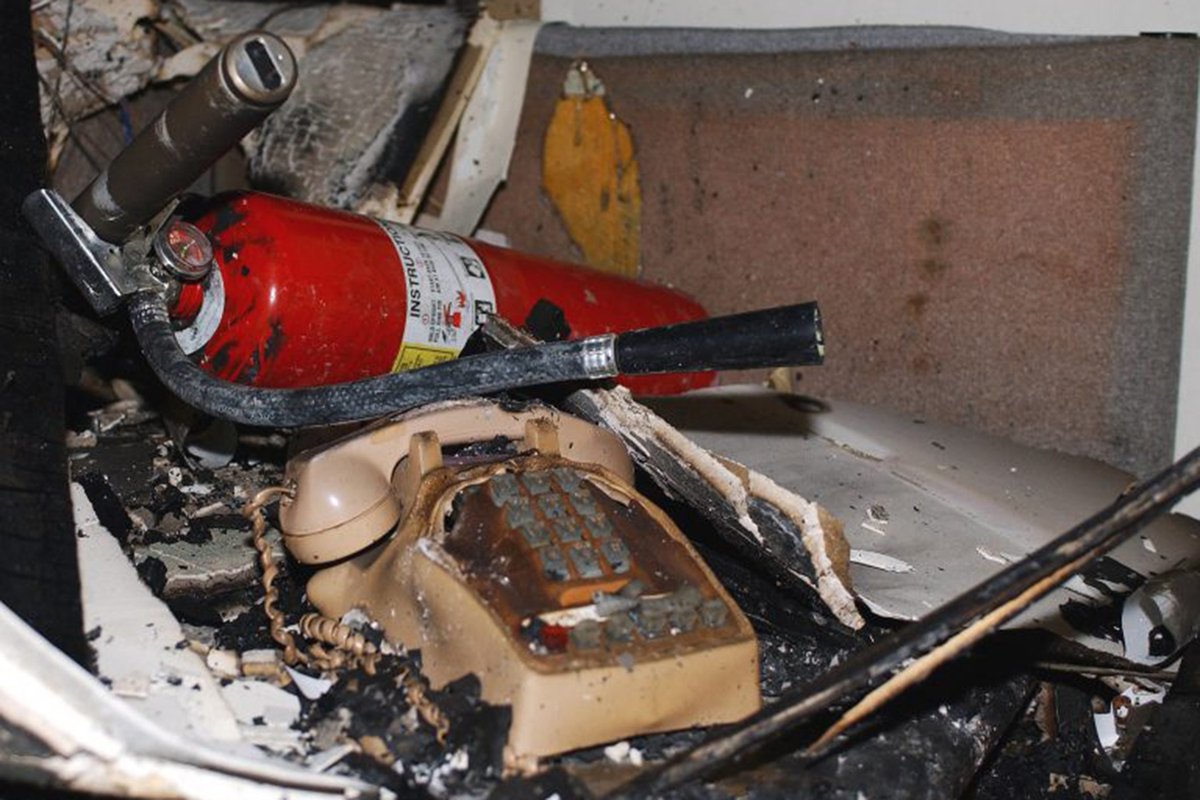
On a clear, crisp Tuesday morning, September 11, 2001, the world watched in horror as a coordinated series of terrorist attacks unfolded across the United States. While images of the World Trade Center's collapse remain seared into global memory, another devastating blow struck the very heart of American military power: the Pentagon. The sheer audacity and tragedy of this attack, specifically targeting the Department of Defense, demanded an immediate, thorough, and transparent examination. This national imperative led to the formation of an independent, bipartisan body—the National Commission on Terrorist Attacks Upon the United States, better known as the 9/11 Commission. Its comprehensive investigative methods culminated in an exhaustive report that remains the definitive account of those horrific events, including the attack on the Pentagon.
This article dives deep into the official investigations and reports on the Pentagon attack, focusing on the rigorous findings presented by the 9/11 Commission. It's a journey not just through facts, but through the painstaking process of uncovering truth in the wake of unimaginable tragedy, offering clarity and context to one of the most pivotal moments in modern history.
At a Glance: Key Takeaways from the 9/11 Commission on the Pentagon Attack
- Definitive Account: The 9/11 Commission's report is the most authoritative public record of the September 11, 2001, attacks, including the events at the Pentagon.
- Flight 77 Confirmed: American Airlines Flight 77, hijacked by five al-Qaeda terrorists, was unequivocally identified as the aircraft that struck the Pentagon.
- Hijacker's Skill: Hani Hanjour, the hijacker-pilot of Flight 77, was confirmed to be a skilled pilot capable of executing the complex maneuver into the Pentagon.
- Missed Interception: Despite warnings and attempts, systemic failures and communication breakdowns prevented military interception before impact.
- Target Selection: The Pentagon was chosen as a symbolic target to maximize casualties and strike a blow against the U.S. military.
- Forensic Evidence: The Commission relied on extensive forensic evidence, flight data recorders, radar tracks, eyewitness accounts, and internal government documents.
- Recommendations for Reform: The report led to significant recommendations for restructuring intelligence agencies, improving air defense, and enhancing inter-agency communication.
Unpacking the Mandate: Why the 9/11 Commission Existed
Following the devastating attacks, a profound need for answers swept the nation. How could such a catastrophic event have occurred? Were there intelligence failures? Could it have been prevented? To address these critical questions, Congress and President George W. Bush established the 9/11 Commission in late 2002.
This independent, bipartisan body was tasked with a monumental mission: to provide "a full and complete account of the circumstances surrounding the September 11, 2001 terrorist attacks, including preparedness for and the immediate response to the attacks." Beyond recounting the events, the Commission was also mandated to offer recommendations designed to guard against future attacks. It wasn't about assigning blame but understanding the complex tapestry of events, decisions, and circumstances that led to 9/11, and how the nation could better protect itself. The Pentagon attack, as one of the four coordinated assaults, naturally formed a crucial pillar of this extensive investigation.
The Pentagon on 9/11: A Ground-Level Perspective
To understand the Commission's findings, it's essential to first grasp the attack itself. On September 11, 2001, at approximately 9:37 AM Eastern Daylight Time, American Airlines Flight 77, a Boeing 757, slammed into the western side of the Pentagon building. This was the third plane to hit its target that morning, following the attacks on the World Trade Center in New York City.
The impact was catastrophic. The plane, traveling at over 500 miles per hour, tore through three of the Pentagon's five rings, causing a massive explosion and a partial collapse of the building. The section hit was undergoing renovations, which paradoxically saved lives as fewer people were in that particular area. However, 184 people lost their lives that day at the Pentagon: 59 passengers and crew on Flight 77 (including the five hijackers), and 125 military and civilian personnel within the building. The attack not only inflicted immense human cost but also symbolically struck at the core of American defense. The very building designed to protect the nation became a target, underscoring the unprecedented nature of the threat. For more on this pivotal event, you can delve into The Pentagon on 9/11.
The Unseen Battle: Flight 77's Trajectory and Missed Opportunities
The 9/11 Commission dedicated a significant portion of its report to meticulously reconstructing the journey of American Airlines Flight 77, from its takeoff at Dulles International Airport near Washington, D.C., to its final, devastating impact. This reconstruction was critical for understanding what happened and why it wasn't prevented.
The Flight Path to Destruction
Flight 77 departed at 8:20 AM, heading for Los Angeles. Around 8:51 AM, the hijackers began their takeover. The plane deviated from its assigned course at 8:54 AM, turning south. Air traffic controllers noticed the deviation and loss of radio contact, but the immediate confusion and the simultaneous unfolding crises in New York hampered effective communication and response.
Crucially, the hijacker-pilot, Hani Hanjour, executed a sophisticated maneuver. After initially flying east past the Pentagon, he performed a wide, 330-degree turn to the south, then flew directly back towards the building at an extremely low altitude, approaching from the west. This difficult maneuver, combined with the plane's high speed, made it incredibly challenging for air defense systems to track and intercept. The plane flew so low that it clipped light poles on its approach.
The Air Defense Puzzle: Why No Interception?
One of the most pressing questions for the Commission was why military interceptors failed to prevent the Pentagon attack. The report laid out a stark picture of a system overwhelmed, unprepared, and hampered by outdated procedures and communication gaps.
- Lack of Cohesion: At the time, responsibility for domestic air defense was split between the Federal Aviation Administration (FAA) and the North American Aerospace Defense Command (NORAD). The FAA's primary role was air traffic control, not threat assessment. NORAD's focus was largely on external threats, not internal hijackings used as weapons.
- Communication Failures: The system relied on ground controllers to manually alert military command centers, often via phone. On 9/11, this process was too slow and cumbersome. Controllers tracking Flight 77 struggled to get critical information to the right military channels in time. NORAD only received notification that Flight 77 was hijacked at 9:24 AM, just 13 minutes before impact.
- No Clear Protocol for Internal Threats: Pre-9/11 protocols assumed hijackings were for ransom or political gain, not suicide attacks. There was no established procedure for shooting down a commercial airliner over U.S. airspace, and the chain of command for such a decision was unclear and lengthy.
- Radar Gaps: While Flight 77 was tracked, the confusion and focus on other incidents meant that its erratic movements were not immediately interpreted as an impending attack on Washington D.C.
- Fighter Jet Deployment: When interceptors were finally scrambled, they were directed to protect Washington D.C. airspace, not necessarily to pursue Flight 77 directly. The fighters from Langley Air Force Base were airborne at 9:30 AM but were still 150 miles away when Flight 77 struck the Pentagon.
The Commission's analysis painted a picture of dedicated individuals doing their best in an unprecedented situation, but within a fragmented system that simply wasn't designed for the threat they faced. This detailed examination of what went wrong proved crucial for subsequent reforms, including improvements in Air Traffic Control's role on 9/11.
The Investigative Machine: How the Commission Uncovered the Truth
The 9/11 Commission’s methodology was exhaustive, drawing on an unprecedented collection of evidence to piece together the events of that day. Their investigation into the Pentagon attack, like the others, was a multi-faceted endeavor that involved:
- Document Review: Sifting through millions of pages of classified and unclassified documents from various government agencies, including the FAA, NORAD, FBI, CIA, Department of Defense, and the White House. This included everything from intelligence memos to internal communications logs.
- Eyewitness Accounts: Interviewing hundreds of individuals, including survivors, first responders, military personnel, air traffic controllers, intelligence analysts, and senior government officials. These personal testimonies provided crucial human context and details that no document could capture.
- Forensic Evidence: Collaborating with forensic experts to analyze wreckage from the plane, building debris, and crash site data. This included identifying fragments of the aircraft and victims to conclusively confirm the type of plane and passenger manifest.
- Flight Data Recorders (Black Boxes): Retrieving and analyzing the flight data recorder (FDR) and cockpit voice recorder (CVR) from Flight 77. These 'black boxes' provided invaluable data on the plane's speed, altitude, heading, and the final chilling moments inside the cockpit. The FDR confirmed Hanjour's flight maneuvers, while the CVR captured the hijackers' voices and the sounds of the attack.
- Radar Data Analysis: Meticulously reconstructing the plane’s flight path using raw radar data from both military and civilian air traffic control systems. This allowed investigators to track Flight 77's exact movements, speed, and altitude changes from the moment it was hijacked until impact.
- Expert Analysis: Consulting with aviation experts, engineers, intelligence analysts, and counter-terrorism specialists to interpret technical data, assess capabilities, and provide context for the operational environment on 9/11.
This rigorous, evidence-based approach ensured that the Commission's findings were not speculative but grounded in verifiable facts, leaving little room for doubt about the fundamental narrative of the attack.
The Commission's Definitive Findings on the Pentagon Attack
The 9/11 Commission's report systematically addressed every facet of the Pentagon attack, debunking theories and establishing a clear, factual record.
Confirmation of American Airlines Flight 77
The report unequivocally concluded that American Airlines Flight 77 was the aircraft that struck the Pentagon. This conclusion was supported by:
- Physical Evidence: Wreckage matching a Boeing 757, including specific parts with American Airlines markings, was recovered from the crash site.
- DNA Identification: DNA from all 59 passengers and crew, and the five hijackers, was identified from remains found at the Pentagon.
- Flight Recorders: Data from Flight 77's flight data recorder precisely matched the aircraft's trajectory and impact parameters. The cockpit voice recorder captured the sounds of the struggle and the final moments.
- Eyewitnesses: Numerous eyewitnesses, including those on the nearby highway and within the Pentagon, saw a large commercial airliner strike the building. Security cameras also captured the plane just before impact.
These combined pieces of evidence left no reasonable doubt about the identity of the aircraft.
The Hijackers and Their Skill
The Commission confirmed that five al-Qaeda operatives, led by Hani Hanjour, were responsible for hijacking Flight 77. Hanjour, identified as the pilot, demonstrated significant flying skill. This was crucial in countering suggestions that the maneuver was beyond a terrorist pilot's capability. The flight data recorder showed that Hanjour executed a descending, high-speed spiral turn – a complex maneuver – before leveling out and hitting the Pentagon at ground level. This indicated a deliberate, precise targeting, not an accidental crash or a less experienced pilot's error.
The Failure to Deter or Intercept
Perhaps the most significant and sobering findings related to the failure of the U.S. air defense system. As detailed earlier, the report highlighted:
- Fragmented Authority: The clear delineation of responsibility between civilian air traffic control (FAA) and military air defense (NORAD) was not designed for a domestic attack using hijacked airliners as weapons.
- Slow Notification: The military was not notified of Flight 77's hijacking until minutes before impact, a delay exacerbated by the unfolding crises at the World Trade Center.
- Inadequate Protocols: No established protocols existed for responding to internal, suicidal hijacking threats, nor a clear chain of command for authorization to shoot down a commercial airliner over U.S. territory.
- Lack of Preparedness: The training and resources of NORAD were primarily geared towards defending against external threats, like Soviet bombers, not nimble internal aerial attacks.
This confluence of factors meant that despite the best efforts of individuals, the system itself was not configured to detect, track, and intercept Flight 77 in time.
Structural Impact and Emergency Response
The report also detailed the immediate aftermath, including the structural damage to the Pentagon and the heroic emergency response. The initial impact caused a massive fireball and the collapse of the outer E Ring and parts of the D and C Rings. Firefighters and emergency personnel from local and federal agencies responded swiftly, saving many lives despite the chaotic and dangerous conditions. Their coordination, while challenging, demonstrated remarkable resilience and bravery under extreme pressure.
Addressing the Misinformation: Common Questions & Misconceptions
In the years following 9/11, numerous conspiracy theories and alternative narratives emerged regarding the Pentagon attack. The 9/11 Commission Report, through its rigorous evidence, directly addresses and refutes these claims.
"Was it really a plane, or a missile?"
The Commission's Answer: It was unequivocally American Airlines Flight 77, a Boeing 757.
Evidence: As detailed above, the evidence is overwhelming: distinctive aircraft wreckage, DNA from passengers and crew, flight data recorder information, eyewitness accounts of a large commercial jet, and security camera footage. Claims of a missile or drone are entirely unsupported by any credible evidence and directly contradicted by all available data.
"Why wasn't there a bigger hole in the building?"
The Commission's Answer: The hole's size and shape were consistent with a high-speed impact from a Boeing 757 at ground level.
Explanation: A plane's fuselage is not solid steel. Upon impact, the wings and fuselage partially disintegrated, while the heavy engines and landing gear penetrated deeper. The initial entry hole, before the subsequent structural collapse, was indeed significant and consistent with the wingspan of a 757. The plane struck the building horizontally at ground level, not nose-down, which explains the distribution of damage and the point of entry. Furthermore, the outer walls of the Pentagon are reinforced concrete, designed to withstand blast forces, which affected how the structure responded to the impact.
"Where's all the debris?"
The Commission's Answer: Debris was extensive but contained within the crash site, much of it pulverized or consumed by fire.
Explanation: A plane hitting a reinforced concrete building at over 500 mph generates immense energy. Much of the aircraft material was fragmented into small pieces, some vaporized by the intense fire fueled by thousands of gallons of jet fuel. What remained was spread across the impact zone, inside the building, and over the adjacent lawn, meticulously collected by investigators. The notion that "no plane debris" was found is false; extensive debris was documented and used for identification.
"Why isn't there more security camera footage?"
The Commission's Answer: Available footage was limited, partly due to the location and nature of the cameras, and has been released or used in investigations.
Explanation: Most cameras around the Pentagon were security cameras, not high-definition video recorders positioned for wide-angle public viewing. They recorded at lower frame rates, often capturing only a few frames of the fast-moving jet. The most widely seen frames, from a nearby security barrier, clearly show the plane moments before impact. All relevant footage was collected by the FBI for its investigation and reviewed by the 9/11 Commission. Claims of withheld or suppressed footage are unsubstantiated.
The Commission's report meticulously addresses these points, relying on factual evidence rather than speculation, offering clear answers to legitimate questions while firmly refuting baseless claims.
From Tragedy to Transformation: The Commission's Lasting Impact and Recommendations
The 9/11 Commission's work didn't end with recounting the past; its primary objective was to forge a safer future. Its recommendations, many of which directly stemmed from the failures identified in the Pentagon attack, reshaped America's national security apparatus.
Reforming Intelligence and Counterterrorism
The report starkly exposed critical gaps in the pre-9/11 intelligence community challenges. It found that intelligence agencies often operated in silos, failing to "connect the dots" across different pieces of information that, in hindsight, might have indicated an impending attack.
Key Recommendations:
- Creation of a Director of National Intelligence (DNI): To unify the disparate intelligence agencies, the Commission recommended establishing a DNI to serve as the principal intelligence advisor to the President, overseeing the entire intelligence community. This aimed to improve coordination, information sharing, and strategic planning.
- Establishment of a National Counterterrorism Center (NCTC): To integrate and analyze all terrorism intelligence, irrespective of its source. This was designed to break down the walls between agencies like the CIA and FBI, fostering a more holistic understanding of terrorist threats.
- Improved Information Sharing: Mandates for intelligence agencies to share relevant information more effectively, moving away from a "need to know" to a "need to share" culture, particularly with state and local law enforcement.
Enhancing Aviation and Border Security
The ease with which the hijackers boarded flights and the vulnerabilities in air defense were glaring. The Commission's findings on Flight 77 highlighted the critical need for a more robust aviation security framework.
Key Recommendations:
- Consolidated Aviation Security: The report supported the creation of the Transportation Security Administration (TSA) to federalize airport security screening, which had previously been handled by private contractors with varying standards.
- Reinforced Cockpit Doors: A direct response to the hijackers' ability to breach the cockpit, making them more resilient against forced entry.
- Improved Passenger and Baggage Screening: Enhanced technologies and procedures for identifying weapons, explosives, and other threats.
- Better Air Defense Coordination: A clearer chain of command and faster communication protocols between the FAA and NORAD were vital for responding to similar aerial threats. This led to significant changes in how military intercepts are authorized and conducted.
Bolstering Emergency Preparedness and Response
The coordinated nature of the 9/11 attacks, and the challenges faced by first responders in New York and at the Pentagon, underscored the need for better national and local preparedness.
Key Recommendations:
- National Incident Management System (NIMS): A standardized approach to incident management across all levels of government, enabling more effective coordination during emergencies.
- Improved Communications Interoperability: Acknowledging that first responders often could not communicate across different agencies, the report called for significant investment in interoperable radio systems.
- Strengthened Homeland Security: The establishment of the Department of Homeland Security (DHS) in the wake of 9/11 aimed to consolidate various federal agencies responsible for border control, emergency response, and infrastructure protection.
These security reforms enacted after 9/11 represent a profound overhaul of U.S. security architecture, directly attributable to the lessons learned and documented by the 9/11 Commission.
The Enduring Relevance of the 9/11 Commission Report
More than two decades later, the 9/11 Commission Report remains a landmark document. It stands as a testament to the power of independent investigation in a democracy, offering transparency and accountability even in the face of national trauma. Its findings on the Pentagon attack, in particular, solidified the factual narrative, discrediting speculative theories and providing a concrete basis for understanding how the seemingly unthinkable could happen.
The report's impact extends far beyond its pages. It fundamentally reshaped how the United States approaches national security, from intelligence gathering to airport checkpoints, and even how local emergency services prepare for large-scale disasters. While debates about specific policies continue, the foundational understanding provided by the Commission about the nature of the threat and the systemic vulnerabilities it exposed continues to guide policy-makers and analysts.
The report is not just a historical record; it is a living document that informs ongoing efforts to protect the nation from evolving threats. It reminds us of the critical importance of adaptable institutions, seamless communication, and constant vigilance.
Looking Forward: Lessons Carried from the Pentagon Attack
The attack on the Pentagon on 9/11 was a profound moment, revealing both the destructive power of terrorism and the resilience of a nation. The 9/11 Commission’s rigorous investigation meticulously detailed every aspect of this tragedy, from the hijacking of Flight 77 to the systemic failures that allowed it to reach its target.
By delving into the official investigations and reports, particularly the comprehensive 9/11 Commission findings, we gain not only a clearer understanding of the events of that day but also insight into the monumental efforts undertaken to prevent their recurrence. The legacy of the Commission is one of unwavering commitment to truth and a call to continuous adaptation in the face of ever-changing threats. It serves as a powerful reminder that vigilance, clear communication, and a unified approach are essential in safeguarding national security. The pain of 9/11 remains, but the lessons learned through meticulous investigation continue to shape a safer world.