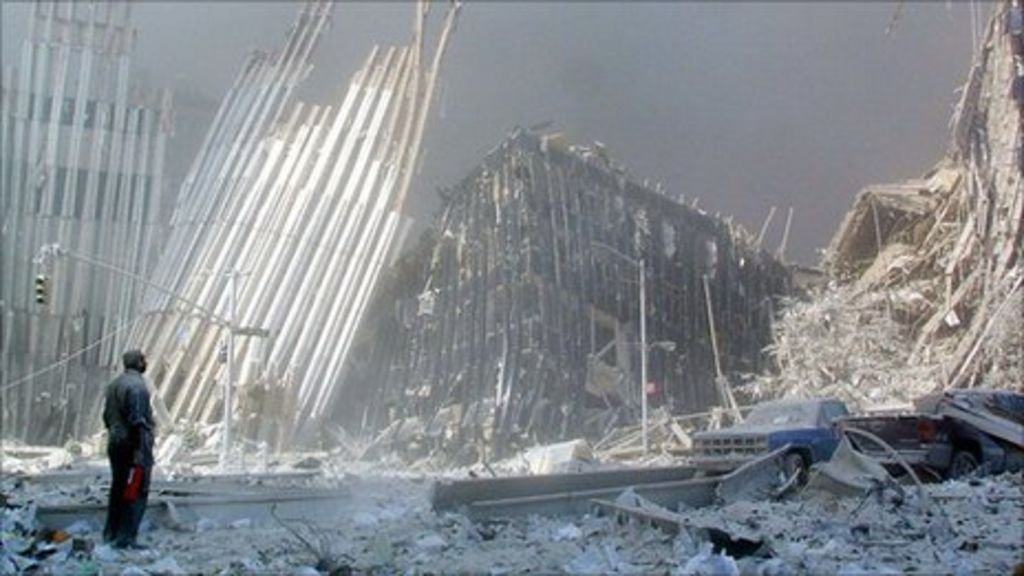
Nearly two decades have passed since the horrific events of September 11, 2001, but for some, the tragedy continues to be shrouded in a fog of disbelief and suspicion. Specifically, the Conspiracy Theories Surrounding the Pentagon 9/11 Attack have proven remarkably resilient, capturing the imagination of those who question the official narrative. While the pain and trauma of that day are undeniable, the stories spun by various "truther" movements often weave a tapestry of misinformation, aiming to redefine what happened when American Airlines Flight 77 struck the Pentagon.
As a seasoned journalist, I've seen how easily doubt can take root, especially when complex events unfold rapidly under immense pressure. My aim here isn't to dismiss legitimate questions but to confront the specific claims made by conspiracy theorists with the concrete evidence and expert analysis that have consistently stood up to scrutiny. We'll delve into the heart of these theories, examining why they emerged and, more importantly, how they fall apart when confronted with the facts.
At a Glance: Key Takeaways on the Pentagon Attack
- A Boeing 757, Not a Missile: Overwhelming eyewitness accounts and physical evidence confirm American Airlines Flight 77, a Boeing 757, struck the Pentagon.
- Hole Size Explained: Engineering analyses show the 75-foot entry hole was consistent with a large jet, with wings shearing off on impact and the fuselage "flowing" into the structure. A smaller, 12-foot hole in an inner ring was caused by landing gear.
- Blast-Resistant Windows: Windows near the impact zone remained intact due to their specialized, blast-resistant design, not a lack of force.
- Abundant Wreckage: Extensive debris, including identifiable plane parts, airline markings, the tail section, and the black box, was recovered.
- No Credible Evidence for Alternatives: Decades of investigations by government agencies, independent engineers, and scientific bodies have consistently debunked alternative claims of missiles or controlled demolitions.
- Motivations of Theories: Claims often involve alleged government complicity or foreknowledge, driven by a desire for a "mythic explanation" rather than accepting chaotic events.
The Morning of September 11, 2001: Setting the Record Straight
On September 11, 2001, at precisely 9:37 a.m. Eastern Time, the unthinkable happened. American Airlines Flight 77, en route from Dulles International Airport, deviated from its flight path and crashed into the western side of the Pentagon, the headquarters of the U.S. Department of Defense. This wasn't a random act; it was a deliberate, coordinated attack by al-Qaeda operatives, part of a larger, devastating scheme that also targeted the World Trade Center in New York City and aimed for the U.S. Capitol or White House before Flight 93 crashed in Shanksville, Pennsylvania.
The consensus view, backed by meticulous government investigation reports from the 9/11 Commission, the FBI, FEMA, and the National Institute of Standards and Technology (NIST), along with non-government scientific investigations and detailed reports in major publications like Popular Mechanics and Scientific American, is clear: al-Qaeda operatives hijacked and crashed these planes. The impacts, followed by intense fires, led to the catastrophic collapses of the World Trade Center towers and significant damage to the Pentagon.
Yet, despite this comprehensive body of evidence, a vocal contingent continues to argue for inconsistencies, overlooked evidence, and alternative scenarios. For them, the Pentagon attack remains a particular flashpoint for doubt, fueling some of the most persistent 9/11 conspiracy theories. To truly understand these claims and why they fail, we need to go back to the scene itself. You might also be interested in a broader view of Understanding the Pentagon 9/11 Attack to grasp the full context.
Deconstructing the Pentagon Attack Claims: Unpacking the "Evidence"
The initial moments after the Pentagon attack were chaotic. Smoke billowed, emergency services rushed in, and the world watched in horror. It was in this immediate aftermath, and the subsequent days, that many of the core Pentagon conspiracy theories began to coalesce.
The "Too Small Hole" Myth
One of the most frequently cited pieces of "evidence" by theorists, including figures like French author Thierry Meyssan and websites like reopen911.org, is the size of the entry hole in the Pentagon. They argue that the initial 75-foot-wide exterior hole and a subsequent 16-foot-wide hole in an inner ring (Ring C) were far too small for a Boeing 757, which has a wingspan of 125 feet and a length of 155 feet. Meyssan even proposed a satellite-guided missile as an alternative, suggesting a U.S. military coup.
The Reality: Structural engineers have thoroughly debunked this claim. The American Society of Civil Engineers (ASCE), through detailed analyses of damaged support columns and computer simulations, determined that American Airlines Flight 77 created an approximately 75-foot-wide hole in the Pentagon's exterior wall (Ring E).
Here's why the full wingspan wasn't replicated:
- Impact Dynamics: As explained by structural engineering professor Mete Sozen, one wing of the 757 struck the ground just before impact, and the other was sheared off by the force of hitting the reinforced concrete structure.
- Energy Dissipation: A plane hitting a rigid structure doesn't behave like a cookie cutter. The immense mass and speed cause the plane to essentially disintegrate and push its way through. As Sozen vividly described, the plane's mass flowed in "closer to a liquid than a solid."
- Inner Ring Hole: The hole in Ring C was indeed smaller, approximately 12 feet wide (not 16 feet, as sometimes claimed). This hole was created by the jet's landing gear, which penetrated further into the building, rather than the entire fuselage.
The idea of a missile creating such a wide, yet contained, entry point with the specific type of structural damage observed is simply not supported by physics or engineering.
The "Intact Windows" Ploy
Another visual argument advanced by sites like Pentagonstrike.co.uk centers on photographs showing seemingly intact windows near the impact zone. Theorists claim these untouched windows prove that the force of a 757 impact couldn't have occurred, again suggesting a missile or smaller craft.
The Reality: This claim overlooks a critical design feature of the Pentagon. Ken Hays of Masonry Arts, the company that designed and installed those very windows, confirmed they were blast-resistant. These aren't your average office windows; they were specifically engineered to withstand significant explosive forces.
While some windows were dislodged by the crash and subsequent collapse of parts of the building, many remained in place precisely because they were designed to absorb inward pressure and resist immense force. Their integrity, therefore, is not evidence against the plane's impact but rather a testament to their specialized construction.
The "No Plane Debris" Fallacy
Perhaps one of the most persistent and easily disproven claims is the assertion that no plane wreckage was found at the Pentagon crash site. Theorists insist that if a 757 had crashed, there would be abundant, recognizable debris.
The Reality: This is unequivocally false. Allyn E. Kilsheimer, a blast expert and the first structural engineer on the scene, identified plane wing marks on the building and saw specific parts with airline markings. He also confirmed finding the tail section of the aircraft and the critical "black box" flight recorders.
Numerous photographs from the scene, many released publicly, show clearly identifiable components of a Boeing 757, including engine parts, sections of the fuselage, and other uniform parts. Human remains of the passengers and crew were also recovered and identified through DNA, providing tragic and undeniable proof of the plane's presence. The sheer force of the impact and subsequent fire did pulverize and melt much of the lighter material, but significant portions of the plane, particularly its denser components, were recovered and cataloged.
The Broader Landscape of 9/11 Conspiracy Theories
While the Pentagon attack theories are specific, they exist within a larger ecosystem of 9/11 conspiracy narratives. Understanding this broader context helps illuminate the underlying motivations and methodologies of "truthers." These theories, almost without exception, attribute the 9/11 attacks to parties other than or in addition to al-Qaeda, often implicating the U.S. government.
LIHOP vs. MIHOP: Understanding the Frameworks
Most 9/11 conspiracy theories can be broadly categorized into two main frameworks:
- LIHOP ("Let it happen on purpose"): This theory posits that key individuals within the U.S. government had foreknowledge of the attacks but deliberately chose to ignore warnings or weaken defenses, allowing the attacks to proceed for ulterior motives. They didn't directly cause the attacks, but they facilitated them through inaction.
- MIHOP ("Make/Made it happen on purpose"): This is a far more extreme claim, asserting that key government individuals actively planned and executed the attacks themselves, either collaborating with al-Qaeda or entirely framing them, often using explosives or other means to bring down the buildings.
A third, less specific category exists for those who simply reject the official account and call for new investigations, without necessarily proposing a concrete alternative theory of their own.
The Consensus View: A Foundation of Evidence
It's crucial to reiterate that the overwhelming consensus, supported by government investigations (9/11 Commission Report, FBI, FEMA, NIST), non-government scientific investigations (e.g., Purdue University), and reports from major magazines (Popular Mechanics, Scientific American, Time), firmly rejects these theories. This consensus points to al-Qaeda's responsibility, the use of hijacked airliners, and the subsequent structural failures caused by impact and fire. Missed pre-attack warnings are attributed to interagency communication failures, bureaucratic inertia, and a "failure of imagination" by the Clinton and Bush administrations, not deliberate complicity.
Beyond the Pentagon: Key 9/11 Conspiracy Theories Debunked
To fully appreciate the factual strength of the official account, it's helpful to briefly touch on how other prominent 9/11 conspiracy theories also unravel under scrutiny.
The "Foreknowledge" Fantasies
Claims of government foreknowledge often point to two main allegations:
- "Extraordinary" Insider Trading: Theorists suggested suspicious trading activity in airline and insurance stocks before 9/11 indicated foreknowledge. The 9/11 Commission investigated this extensively and found no evidence of insider trading based on advance knowledge. The suspicious trades were attributed to legitimate, albeit complex, market activities, showing no pattern linked to foreknowledge.
- "Air-Defense Stand-Down": Another common claim is that NORAD (North American Aerospace Defense Command) was ordered to stand down, allowing the planes to reach their targets unhindered.
- The Reality: NORAD faced significant challenges that day. Hijackers turned off transponders, making tracking difficult. The U.S. had limited fighter jet availability (only 14 on alert in the contiguous 48 states). Crucially, pre-9/11, there was no automated system for civilian air traffic control to alert NORAD about hijacked planes. The longest warning NORAD received was a mere 8 minutes for American Airlines Flight 11 before it hit the North Tower. This points to systemic failures and a lack of preparedness, not a deliberate stand-down.
The "Controlled Demolition" Delusion (World Trade Center)
Perhaps the most widespread 9/11 conspiracy theory centers on the collapse of the World Trade Center Twin Towers and 7 WTC. Proponents like Steven E. Jones, Richard Gage, and David Ray Griffin allege that these buildings were brought down by controlled demolitions using explosives (like thermite), rather than the plane impacts and fires.
The Reality: NIST's exhaustive investigation concluded that the impacts and subsequent fires were the sole cause of the collapses. While kerosene fires (typically 260-315°C) are indeed insufficient to melt steel (which melts at 1,539°C), they significantly softened and weakened the steel structures, causing floors to sag and pull on perimeter columns. This led to a progressive, gravity-driven collapse.
Challenges to the demolition theory are numerous:
- Scale of Explosives: The immense amount of explosives required to simultaneously destroy all structural columns in three massive skyscrapers, timed perfectly, would be staggering and impossible to conceal.
- Lack of Evidence: Despite extensive debris removal and investigations, there is no credible evidence (auditory or physical) of explosives or thermite by-products. Independent analyses have consistently disputed claims of thermite residue.
- Seismic Activity: The seismic signatures of the collapses were consistent with gravity-driven events, not controlled demolitions.
Flight 93: Shot Down or Heroic Resistance?
The crash of United Airlines Flight 93 in Shanksville, Pennsylvania, has also been a target for conspiracy theorists, with claims ranging from the plane being shot down by a U.S. fighter jet to wreckage found miles away.
The Reality: The official account, supported by cockpit voice recordings, eyewitness testimonies, and physical evidence, confirms that passengers and crew bravely resisted the hijackers, leading to the plane crashing into a field.
- Wreckage Location: The main engine was found only 300 yards from the primary crash site, consistent with the plane's high-speed trajectory. Lighter debris found further away was scientifically attributed to wind carrying lightweight materials from the intense fireball created by the impact.
- "Shot Down" Debunked: There is no evidence, radar data, or eyewitness testimony from the military to support a shoot-down. Reports of the plane landing safely in Ohio were quickly retracted as cases of mistaken identity. The sole photograph of the mushroom cloud from the impact has been authenticated by multiple agencies.
The "Fake Hijackers" Ruse
Early media reports, citing initial confusion, named some individuals as hijackers who were later found alive. This fueled claims that the hijackings were faked or staged.
The Reality: This was clarified as a case of mistaken identity, primarily due to common Arabic names. The FBI has consistently expressed confidence in the identities of the 19 hijackers. The 9/11 Commission did note that 16 of the 19 hijackers should have been denied U.S. entry due to visa or passport issues, and critical intelligence about two al-Qaeda agents was not shared between the CIA and FBI – again, highlighting intelligence failures, not deliberate deception.
Accusations Against Foreign Governments
Some theories attempt to implicate foreign governments, such as Pakistan's ISI, Israel's Mossad, or Saudi officials, in financing or foreknowledge of the attacks.
- Israel-Specific Theories: Often rooted in antisemitism, these theories falsely claimed Jewish employees were warned to skip work on 9/11. The number of Jewish fatalities (270-400) was entirely consistent with their proportion in the local population of New York City, debunking this hateful claim.
- Saudi Arabia: Allegations of Saudi government support have been a long-standing concern, with details emerging from the declassified "28 pages" of the Joint Inquiry report, which indicated some links but stopped short of proving direct complicity in the attacks. These remain subjects of ongoing debate and investigation, but do not invalidate the core facts of the attacks.
The "No-Planes" Absurdity
At the extreme end of the spectrum, some theorists like Morgan Reynolds claimed no planes were used at all, suggesting digital compositing created footage of the aircraft, implying missiles or holograms were used.
The Reality: This theory is so far-fetched that it's largely rejected even within the 9/11 Truth movement itself. It defies all logic, overwhelming physical evidence, and the countless eyewitness accounts of people seeing actual planes hit the buildings. This theory serves as a stark example of how far some individuals will go to deny observable reality.
Why Do These Theories Persist? Motives and Criticisms
Given the sheer volume of evidence supporting the official account, why do these Conspiracy Theories Surrounding the Pentagon 9/11 Attack and others continue to circulate and gain traction?
Explaining the "Why": Proposed Motives
Theorists often propose grand, overarching motives for the alleged government complicity:
- Establishing a "Pax Americana": A new global order dominated by the U.S.
- Justifying Wars: Providing a pretext for invasions of Afghanistan and Iraq.
- Covering Up Funds: A misinterpretation of a Donald Rumsfeld speech about outdated Pentagon accounting systems (he was discussing administrative inefficiencies, not missing funds related to 9/11).
- Creating a "New World Order": A shadowy cabal manipulating global events.
Some even cite historical precedents like Operation Northwoods, a rejected 1962 false-flag plan to create public support for a war against Cuba, as evidence of similar government willingness to deceive its own people. While such historical documents show that governments can consider unethical actions, connecting them directly to 9/11 requires an enormous leap of faith without a shred of direct evidence.
The "Reverse Scientific Method": How Conspiracism Works
Critics, including respected academics and journalists, often label 9/11 conspiracy theories as "conspiracism" – a "mythic explanation" for traumatic, world-altering events. Michael Shermer, writing in Scientific American, highlighted that true scientific theories rely on a "convergence of evidence," meaning multiple lines of independent data point to the same conclusion. Conspiracism, by contrast, often employs a "reverse scientific method":
- Predetermined Conclusion: The conclusion (e.g., "the government did it") is decided first.
- Selective Data: Any piece of data that contradicts this conclusion is discarded, reinterpreted, or labeled as part of the cover-up.
- Anomalies as Proof: Minor anomalies, unanswered questions (often due to the chaotic nature of real-world events), or even simple misunderstandings of physics or engineering are elevated to "proof" of the conspiracy. A few anomalies are taken to undermine an entire mountain of converging evidence.
Major publications like Popular Mechanics and Scientific American have published detailed rebuttals, meticulously addressing and debunking these claims point by point.
Consequences and Condemnation
The persistence of these theories isn't harmless. Political figures like Senator John McCain have condemned them for "trivializing" the event and "exploiting public anger." Legal cases attempting to sue U.S. officials for orchestrating the attacks have been dismissed by courts as "cynical delusion and fantasy," leading to sanctions for lawyers who file such frivolous lawsuits.
Beyond the legal and political consequences, the human cost is immense. It disrespects the victims, insults the intelligence of the investigators, and distracts from the crucial work of understanding the true causes and preventing future attacks.
Moving Forward: The Importance of Factual Understanding
The September 11th attacks were a profoundly traumatic event, shattering a sense of security and leaving deep scars. It's natural for people to seek answers, especially when faced with such incomprehensible violence. However, the urge to find a hidden, nefarious plot can sometimes override the patient pursuit of truth, leading down rabbit holes of speculation and misinformation.
The facts regarding the Pentagon attack, and the broader 9/11 events, have been meticulously investigated, documented, and cross-referenced by experts across various fields—from structural engineering to aviation forensics. These investigations consistently point to the same conclusion: al-Qaeda carried out these attacks using hijacked commercial airliners.
Instead of succumbing to narratives that erode trust and promote unsubstantiated claims, we can find greater understanding and, perhaps, a measure of peace in acknowledging the immense tragedy for what it was. By relying on credible evidence and critical thinking, we honor the memory of those lost and strengthen our collective ability to learn from history. The story of 9/11 is not one of government conspiracy, but one of terrorist evil, incredible bravery, and the enduring resilience of the human spirit.